
A Kenyan foundation, since 2020.
What began as one cohort in 2020 is now a registered NGO working across Kenya, turning waste into food and opportunity.
Who we are
Lishe Grow Foundation turns the organic waste a community throws away into food security and household income.
The work began in Kibera in 2020 and formalised as a non-governmental organization in 2026. Since then it has grown into composting hubs, school and household gardens, and women's cohorts, all built on one idea: nothing useful should be thrown away. "Lishe" means nutrition in Swahili. The foundation also works to include people often left out: single mothers, caregivers of children with albinism, and persons with disabilities.
Our vision
Circular economy for a resilient, food-secure future.
Our mission
Delivering environmental solutions that generate measurable outcomes and strengthen resilient livelihoods for the future.
See the impactCore values
Five values guide the work.
-

Integrity
We weigh, log and report what the work produces, and we are clear about what is measured and what is estimated.
-
Innovation
We turn the organic waste a community throws away into compost, food and income, so nothing useful is wasted.
-

Stewardship
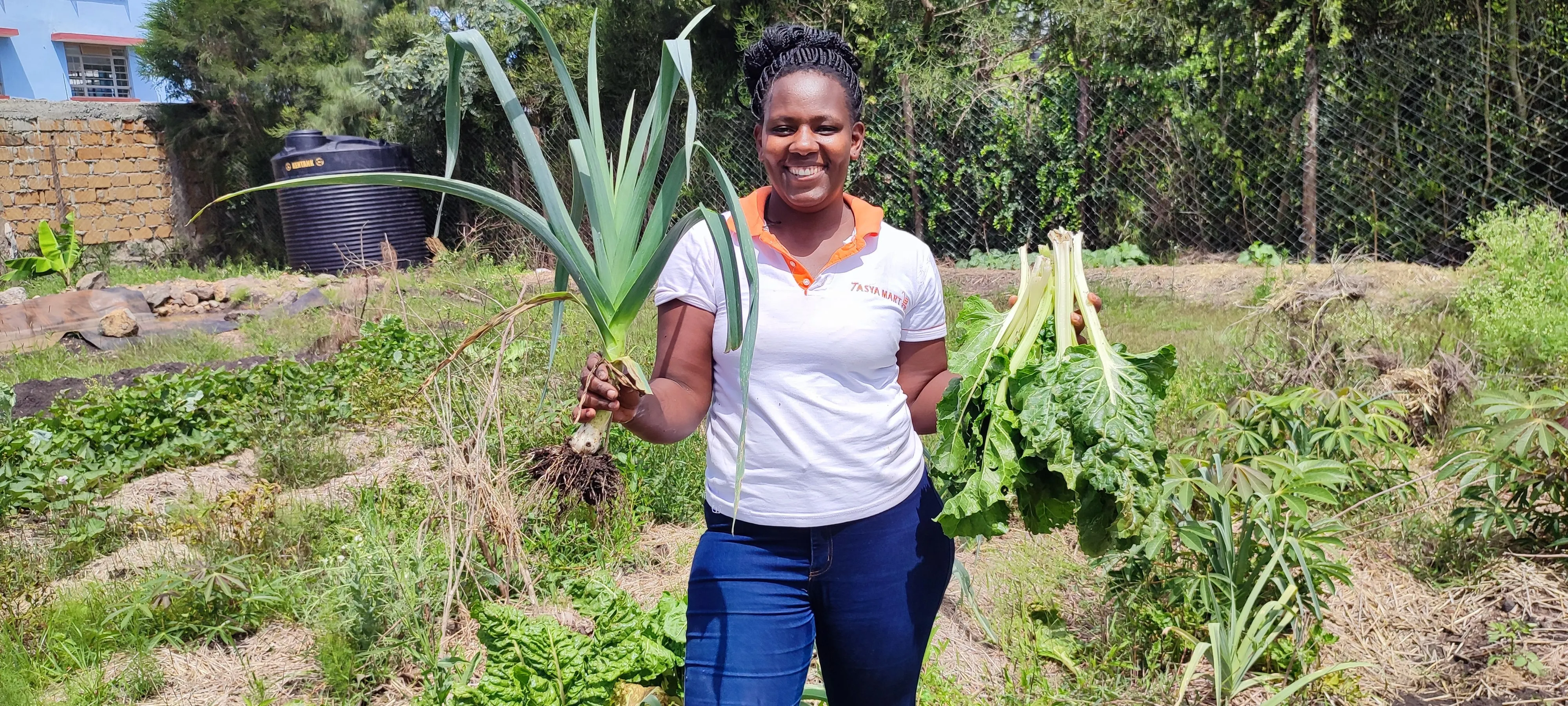
We restore rocky, degraded and flood-prone land into fertile food gardens, and look after the soil that feeds households.
-

Collaboration
Each cohort trains the next, and the work grows with schools, partners and funders rather than depending on us alone.
-

Impact
We judge the work by outcomes that can be measured, in the food, soil and income of the households we work with.


The founder
Built from the ground, in Kibera.
The foundation's founder started the work in Kibera in 2020, growing it from a single community cohort into a registered NGO reaching schools, households, and women's groups across Kenya, with partnerships beyond it.
The approach is shaped by the place it came from: turning thickets, rocky terrain, and degraded, previously non-arable and flood-prone land into fertile food gardens, and proving the model in some of the hardest conditions before adapting it elsewhere.
Join the work